

Discover Pesaro





Plan Your Trip


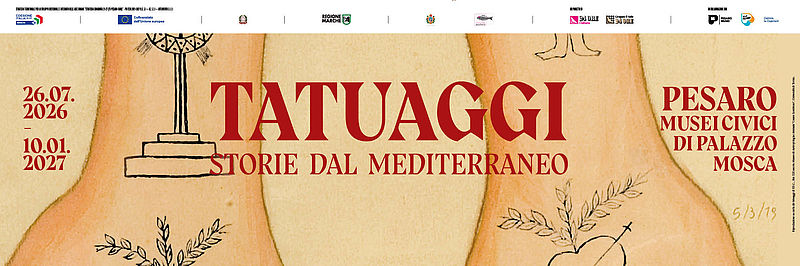
Tattoos. Stories from the Mediterranean
At the Musei Civici di Palazzo Mosca, the exhibition by 24 ORE Cultura – Gruppo Il Sole 24 ORE that explores tattooing as a way to journey through the history of Mediterranean civilizations
From July 25, the Musei Civici di Palazzo Mosca host “Tattoos. Stories from the Mediterranean,” the exhibition produced by 24 ORE Cultura – Gruppo Il Sole 24 ORE that weaves together anthropology, history, art, and the material culture of Mediterranean civilizations. Promoted by the City of Pesaro and Fondazione Pescheria – Centro Arti Visive in collaboration with Pesaro Musei, the exhibition was curated by Guido Guerzoni with the collaboration of Beatrice Corti.
Through an analysis of “Adriatic tattooing practices,” the project spans more than five millennia – from 3,300 BC to the present day – starting from the wider Mediterranean area and arriving at the specific character of the Adriatic, the ancient Mare Superum, where Pesaro is the epicenter of a narrative that is both land-based and maritime, local and international. A defining feature of this city, the sea is not a boundary but a space of connections, exchanges, and cross-pollination. In this setting, tattooing – a practice that is at once intimate and public – becomes a language capable of traveling through history and binding cultures together.
Set up in the mezzanine and in the Falegnameria (the former carpentry workshop) of Palazzo Mosca, the exhibition explores tattooing as a language of identity, ritual, and art, with an interdisciplinary approach and an immersive, narrative layout, focused on cultural cross-pollination and the key symbols of this practice.
The exhibition is part of a European “tour” of a project that began in 2024 at MUDEC – Museo delle Culture di Milano and continued at the Centre de la Vieille Charité in Marseille, the Mediterranean Museum in Stockholm and in Gorizia, as part of the Gorizia–Nova Gorica European Capital of Culture program. From this perspective, the Pesaro stop – Italian Capital of Culture 2024 – is conceived as a further thematic exploration, this time focused on the Adriatic and on the sea as a symbol of transit, encounter, and the layering of cultures and identities.
The Pesaro exhibition also explores the link between Lombroso and the city, especially the period when the Verona-born scholar directed the San Benedetto Psychiatric Hospital: it was in this very asylum, together with his collaborator Luigi Frigerio, that he began working on the framework of L’uomo delinquente (Criminal Man), the founding text of positivist criminal anthropology.
Another new feature is a section on sailor tattoos in the Adriatic context, a subject that has so far remained in the background of research. Many civilizations along the Mare Superum practiced tattooing, from the pre-Roman peoples of Daunia to the Christian Croatian and Bosnian communities under Ottoman rule, and from the sailors of Taranto in the mid-eighteenth century to the dockworkers of Trieste in the nineteenth century, finally arriving at the particular case of Pesaro. Thanks to the collaboration with the Museo della Marineria Washington Patrignani (Maritime Museum), the exhibition highlights the decorative practices on the boats of sailors from Pesaro and the Marche region, seen as extensions of their own bodies and as a reference to the tattoos some of them bore so that they could be returned to their loved ones if they died in a shipwreck.
Another key element in the development of the exhibition is the close collaboration with the Musei Civici di Palazzo Mosca: to showcase works from their rich permanent collections, several liturgical objects from both Italy and the Holy Land are on display, echoing the iconography of the Christian religious tattoo found throughout the Mediterranean.
The exhibition route
Visitors are welcomed by seven sections organized according to chronological and thematic criteria.
The introduction documents the origins of tattooing in the Mediterranean area and its global presence since ancient times. Images, videos, and reconstructions trace the major discoveries that attest to the spread of this practice in archaic times, from the mummified remains of Ötzi – the first tattooed man – to seventeenth-century Peruvian mummies, by way of a set of archaeological grave goods dating back to the Paleolithic.
Mediterranean protohistory. The first section explores the practice among the peoples of the Mediterranean and Adriatic coasts, from the protective symbols used in ancient Egypt to punitive tattooing in the Greco-Roman world and the hypotheses about pre-Roman Italic civilizations. Across the different protohistoric cultures, tattooing took on a wide variety of meanings, ranging between aesthetics and punishment, protection and stigma.
Origins of devotional tattooing. The link between tattooing and the major monotheistic religions emerges from the earliest Early Christian evidence through to European documentary sources of the Renaissance. The section depicts an Italy and a Europe populated by pilgrims tattooed in the Holy Land and by devotional symbols etched into the skin despite the explicit prohibitions set out in the Holy Scriptures. This section features four works from Pesaro’s Musei Civici that connect liturgical iconography with the most common devotional tattoos: alongside a still life bearing a classic memento mori and other religious symbols, there are three ecclesiastical furnishings in wood, mother-of-pearl, and ivory – a model of the Basilica of the Holy Sepulchre, one of its aedicule, and a wall-mounted holy water font – which are quintessential examples of the craftsmanship of the artisans active from the late sixteenth century in Bethlehem, Ain Karim, and Jerusalem, the favorite destinations of pilgrims to the Holy Land.
Loreto and the religious tattoo as a sacred “souvenir.” Since its founding in 1469, the Sanctuary of Loreto has been one of the main places of pilgrimage and Marian devotion in Italy, as well as home to the basilica that houses the Holy House. The birth of the Sanctuary is linked to the crusaders’ return from the Holy Land: besides transporting the stones of the Holy House, they passed on some Jerusalem traditions, including devotional tattooing. In Loreto, as in Jerusalem, the tattooist’s trade was practiced by a small number of families who handed down the craft and its tools. It is from these very workshops that the selection of wooden tattoo stamps on display comes, thanks to the collaboration with the Museo delle Civiltà in Rome.
The Falegnameria of Palazzo Mosca houses the sections specifically related to the history and identity of Pesaro.
Tattooing in Lombroso’s studies. In the theories of Cesare Lombroso, the father of Italian criminal anthropology, tattooing became one of the main indicators of criminal tendencies. It was in this very Marche city – where he served as director of the San Benedetto Psychiatric Hospital (1872) – that he laid the foundations of L’Uomo delinquente, the first comprehensive account of his theories on the concept of the “born criminal.” Drawings, photographs, and interactive stations with 3D content, on loan from the Museo di Antropologia Criminale “Cesare Lombroso” (University of Turin), show how, in the late nineteenth century, tattooing became a tool of medical and scientific classification and a social stigma that shaped its perception for centuries to come.
Dockworkers, fishermen, and sailors. The section devoted to sailor tattoos brings back to light a tradition that, although documented mainly abroad, was also present in Italian port communities, both in the merchant navy and in the ranks of the military navy. According to Lombroso, tattoos appeared as a sign of deviance among criminal sailors and dockworkers, who were lumped together with other depraved categories. However, several later anthropological studies defended their role as a marker of identity, typical of a de facto nomadic community often placed on the margins of civil society, which over the centuries developed an intricate symbolism linked to life at sea. In addition to body decoration, the embellishment of hulls and sails is also a valuable testimony to the seafaring folk art that is particularly rooted in the Adriatic.
Contemporary perspectives. Coming up to the present day, the section reflects on the practice of female tattooing, which since ancient times has been a living language of identity in the Mediterranean. Distinctly female forms of body decoration have existed since time immemorial in many parts of the Mediterranean and still survive today in some mountainous areas of Bosnia and Herzegovina, and in Algeria, Turkey, Syria, and Kurdistan.
The exhibition concludes with an in-depth look at two of Pesaro’s cultural sites connected to Cesare Lombroso’s time in the city.
The memory and history of the San Benedetto asylum live on in the Museo Laboratorio alle Stufe, which was created as part of the initiatives of the Permanent Health Promotion Center set up at the Galantara RSA (nursing home). The exhibition is organized around the objects recovered from San Benedetto, and its centerpiece is the memorial collection built around the “Diario dell’ospizio di San Benedetto in Pesaro” (Diary of the San Benedetto Asylum in Pesaro), a newspaper founded by Cesare Lombroso that involved patients in its writing and printing, with the aim of “spreading more accurate ideas about the moral condition of the insane and raising them in the eyes of the common people, who often regard the demented as ferocious beasts.” In its mission to preserve the historical memory of the Pesaro asylum, the museum teaches respect for others and the inclusion of differences.
The asylum complex also included a key place for patient rehabilitation: the Orti Giuli, one of the earliest nineteenth-century examples of a public park in Italy. The gardens took their current form between 1827 and 1830 thanks to Francesco Cassi, a Pesaro count and renowned Latinist, in honor of his cousin Giulio Perticari – a distinguished man of letters who died in 1822 – from whom they take their name. With the help of the Ferrara engineer Pompeo Mancini, Cassi transformed the old bastion at the entrance to the city into an Arcadian garden in the Neoclassical style, with groves, paths, statues, busts, and Roman inscriptions. From the highest point, where the bust of Perticari stands, you can enjoy a striking panoramic view of the harbor, the river, and Colle San Bartolo. This green space, mirroring a garden created inside the asylum, was open to the most stable patients, who would stroll and read the newspaper there, just like their fellow citizens.
The exhibition “Tattoos. Stories from the Mediterranean” is funded under the Territorial Strategy for the Sustainable and Integrated Development of Urban Areas “Strategia Congiunta 21-27 (ITI PESARO – FANO) – PR FESR 20221 – 2027 O.S. 5.1 – Az. 5.1.1 – Intervento 5.1.1.1”
Tattoos. Stories from the Mediterranean
curated by Guido Guerzoni
in collaboration with Beatrice Corti
July 26, 2026 – January 10, 2027
Musei Civici di Palazzo Mosca
hours: Monday 10:00 AM–1:00 PM; Tuesday–Sunday and public holidays 10:00 AM–1:00 PM and 3:00 PM–7:00 PM
from September: Tuesday–Sunday and public holidays 10:00 AM–1:00 PM and 3:00 PM–6:00 PM
info 0721 387541 info@pesaromusei.it
See also
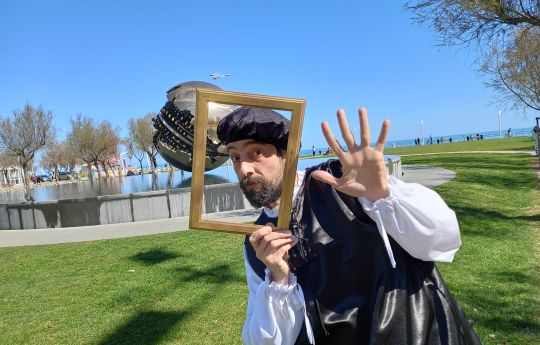
Guided tours and excursions 2026
Guided tours and excursions offered by Pesaro Welcome: ANIMATED GUIDED…
Discover more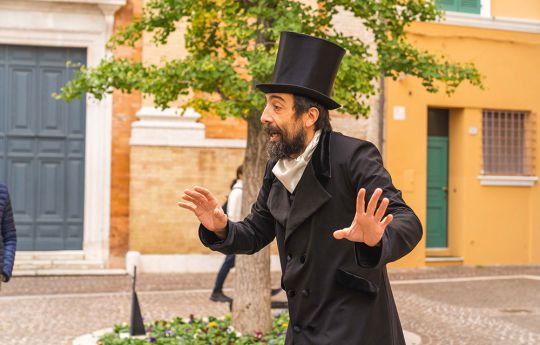
Animated Guided Tour – Pesaro
Discover the history of Pesaro through its historical figures who…
Discover more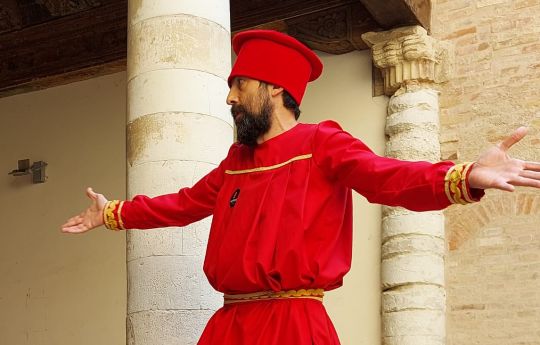
Animated guided tour – Urbino (+ bus)
Discover the history of the city through its historical figures…
Discover more


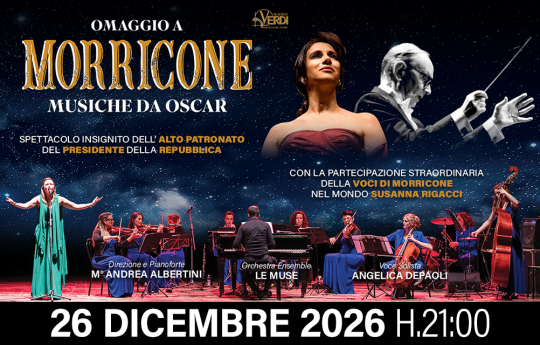
TRIBUTE TO MORRICONE – Oscar-Winning Music
Dec 26, 2026, 9:00 PM – Auditorium Scavolini An unmissable,…
Discover more

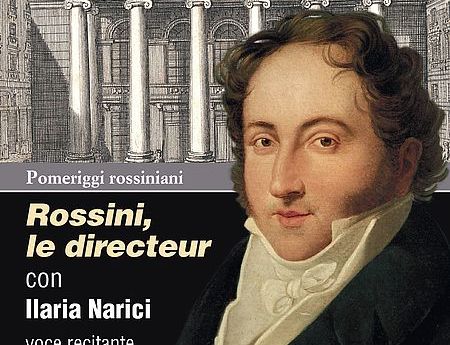
Afternoons with Rossini
A series organized by the Rossini Foundation in collaboration with…
Discover more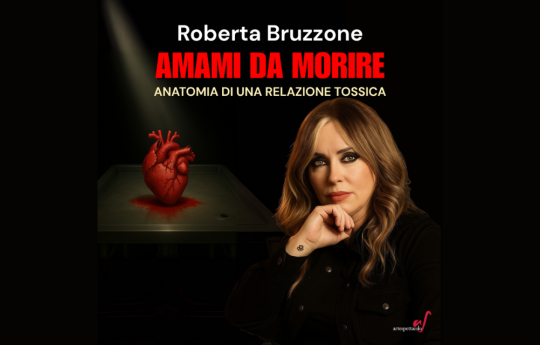
ROBERTA BRUZZONE – Love Me to Death: Anatomy of a Toxic Relationship
November 20, 2026, 9:00 PM Where: Auditorium Scavolini – Pesaro…
Discover more