

Discover Pesaro

Plan Your Trip

Urbania: The Town of the Befana
Built along the course of the Metauro River, Urbania has a long history. Until the early 17th century, the town was known as Casteldurante, and it changed its name when Pope Urban VIII elevated the village to the rank of city and diocese. Today, it is best known for a special celebration that takes place in the days leading up to and on Epiphany: the National Befana Festival.
For about twenty years now, many events have been held in the city center, which is decorated with thousands of stockings, filled with stalls, and enriched with shows and concerts. The main figure, the Befana, attracts tourists and children by telling traditional stories and showing how coal is made or how she works at the loom. The most spectacular part of the event is reached when, from the village bell tower, the Befana glides down to the largest stocking in the world.
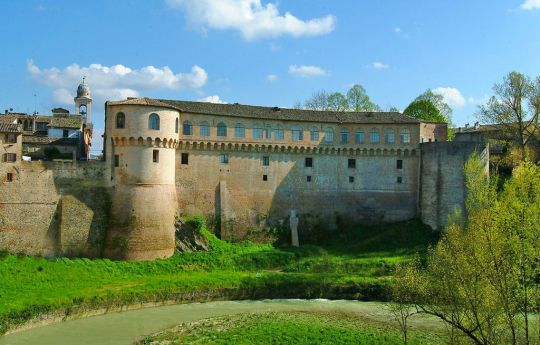
However, Urbania has much more to offer. The Ducal Palace, built to serve both as a fortress and as the residence of the Dukes of Urbino. Today, its halls house the Civic Museum, which contains an important collection of engravings and a collection of 16th- and 17th-century paintings by both Marche and non-Marche artists.
The Ducal Palace also hosts the Museum of the History of Agriculture and Craftsmanship, where visitors can see all the tools used and the traditional farming methods practiced by the farmers of the Metauro Valley.
It is not only the Ducal Palace that preserves culture and artworks. In Urbania, the Leonardi Museum boasts a collection of various works of art and religious furnishings dating back to the beginnings of Christianity.
Another place that makes Urbania unique in the world is the Church of the Dead. Its name comes from the bodies of 18 mummies, which can be viewed during a highly evocative tour. Access to the church is through a rare and beautiful Gothic doorway.
Urbania’s historic center is rich in other churches, breathtaking views, and ancient palaces. Walking through its streets, you encounter two bridges: the Ponte del Riscatto, from which you can see the Ducal Palace, and the Ponte dei Coppi, which offers views of the historic medieval walls. In the historic center, it is still possible to visit the old artisan workshops that have preserved the Renaissance tradition of producing hand-painted and decorated Maiolica.
Beyond the Befana and the mummies, Urbania also preserves other fantastical characters: the elves. Just a short distance from the town center, about 5 kilometers away, you can get lost among the trees of the Elves’ Forest. A truly unique experience.
See also

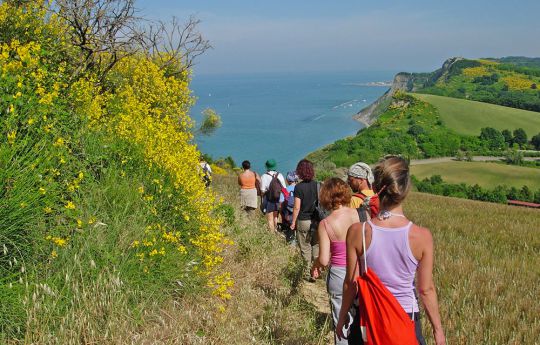
Trekking on San Bartolo
Sea views, wild beaches, and Mediterranean scrub. Route: 4.5 km,…
Discover more


Shopping and Wellness
Tipico.tips-Local gems from Marche The Welcome Pesaro Card gives you…
Discover more


Museums and Monuments
Card Pesaro Capitale DISCOUNTED FOR ALL WELCOME PESARO CARD HOLDERS…
Discover more