

Discover Pesaro


Plan Your Trip

History of Pesaro
Historical information about Pesaro dating back to the pre-Roman era is scarce, and according to Pliny the Elder, much of the territory was once under the control of the Siculi and the Liburnians. Later, it was successively dominated by the Umbrians, Etruscans, and Gauls, before coming under the aegis of the Italian Signorie, which coincided with its period of greatest splendor. Based on this overview, let us examine the key milestones that have shaped the history of Pesaro over the centuries.
The Roman Era of Pesaro
Beyond the few historical records provided by Pliny the Elder, it can be stated without doubt that the history of Pesaro truly begins in the Roman era. Furthermore, recent studies indicate that the Pesaro area was inhabited by the Piceni, as evidenced by the necropolises of Molaroni and Servici, developed between the 9th and 7th centuries BC. Initially, the Piceni engaged in trade with the Greeks, then with the Celts, and finally with the Gauls, who lived in the territory of Pisaurum before the Romans. With the arrival of the Romans, the city of Pesaro underwent a radical transformation; it developed significantly during the Imperial age when Augustus (63 BC–14 AD) established it as an important port and a city devoted to commerce. Towards the end of the Roman Empire, Pesaro faced significant problems with banditry, and around 270 AD, with the barbarian invasions, though it managed to resist by strengthening its city walls.
Pesaro in the Middle Ages
After the Roman era, Pesaro experienced its most remarkable historical period thanks to the governance of the great Italian Signorie. That said, by the end of the 12th century, it became a commune and was ruled by some of the most prestigious noble families in Italy, such as the Malatesta, Sforza, and Della Rovere, who gave a significant boost to the city’s artistic development. The Sforza rule in Pesaro ended in the 16th century, when Pope Julius II granted the city to his nephew, Francesco Maria della Rovere, Duke of Urbino. The Della Rovere rule was interrupted by the election of Pope Leo X from the Medici family of Florence, who granted the Duchy to Lorenzo. After the death of Leo X, the Duchy returned under the protection of the Della Rovere family. During this period, the famous silk factories, fortifications, and the port were constructed. With the death of Francesco Maria II della Rovere without heirs, in 1631, Pesaro—which in the meantime had been incorporated into Urbino—returned to the Papal States, then governed by Pope Urban VIII. As a result, the Middle Ages were the period in which Pesaro experienced its greatest cultural fervor, lasting at least until 1799, when it came under the control of the French Empire led by Napoleon, before being annexed to the Kingdom of Italy in 1861.
Pesaro is a splendid example of a city that has progressively developed over 2,000 years: an exceptional testimony of art and culture, reflecting the various dominions that have succeeded one another.
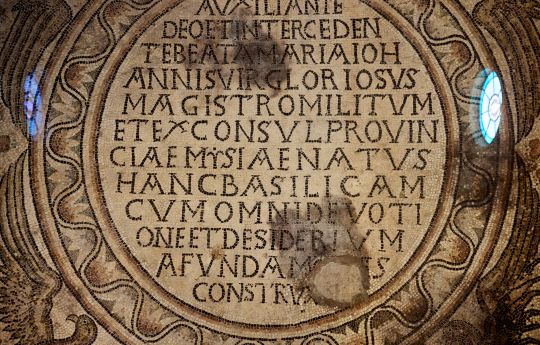
Walking through the historic center, one can encounter numerous traces of this illustrious past, such as the Ducal Palace, commissioned by Alessandro Sforza in the mid-15th century, the Cathedral, which houses extraordinary mosaic floors, and the majestic Rocca Costanza, a splendid example of military architecture.
In addition to these grand buildings, the city boasts countless cultural venues that, besides preserving the historical and artistic memory of the city, host numerous events and temporary initiatives throughout the year aimed at enhancing Pesaro’s cultural life.
See also

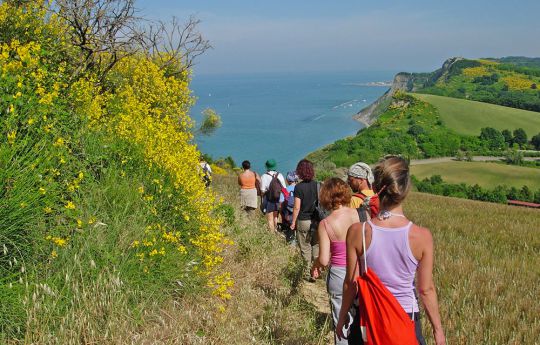
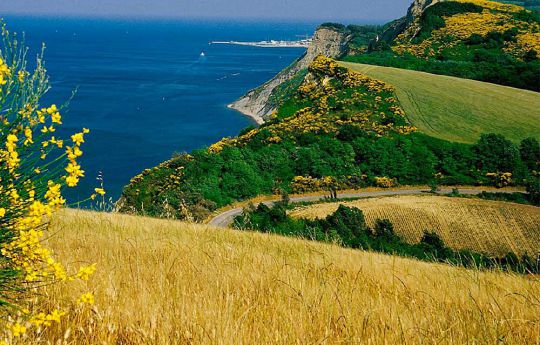
Trekking on San Bartolo
Sea views, wild beaches, and Mediterranean scrub. Route: 4.5 km,…
Discover more


Shopping and Wellness
Tipico.tips-Local gems from Marche The Welcome Pesaro Card gives you…
Discover more


Museums and Monuments
Card Pesaro Capitale DISCOUNTED FOR ALL WELCOME PESARO CARD HOLDERS…
Discover more