

Discover Pesaro

Plan Your Trip

Historic Villages
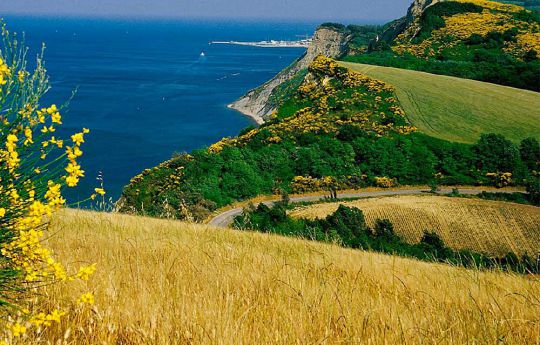
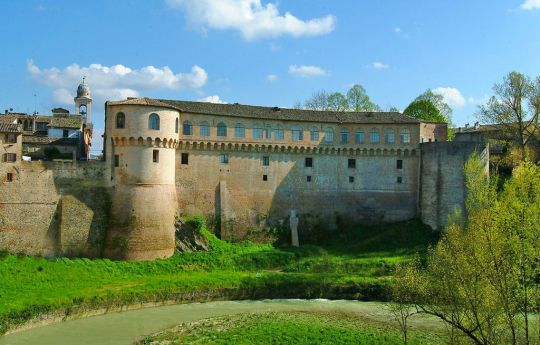
The Apennine mountain range between Pesaro and Urbino hides some jewels: they are small ancient villages. In the 50 km that separate the Adriatic Coast from the hills, many small villages and castles dating back to the medieval era are scattered throughout the landscape.
These villages, despite the passage of time, still preserve their charm and original structure intact.
Framing these beautiful examples of architecture are the Marche hills, so famous and inspiring in the poems of Leopardi, which gradually descend toward the Adriatic Sea. Every single stone of the monuments and houses that make up these places seems to perfectly tell the story and way of life of the local population. Tradition, nature, architecture, and history capture attention at first glance and hardly leave anyone indifferent or unchanged who is fortunate enough to visit these locations.
Candelara is a small village near Pesaro in a fortunate position: on one side, visitors can admire the hills and Apennine peaks, and on the other, the coast and the sea. Among its notable monuments are the 11th-century castle with its entrance gate and clock, the defensive walls, and the connecting bridge. Additionally, visitors can also explore the Pieve di Santo Stefano, which still preserves remnants of the frescoes that once adorned the church walls.
Novilara is an ancient small village situated on one of the hills overlooking the city. Beyond its walls, its name is closely linked to the necropolis, which currently counts more than 300 tombs. The importance of this archaeological site is also due to the presumed age of the artifacts found, covering a chronological span from the end of the 9th century to the mid-4th century BC.
Just a few kilometers from Pesaro lies Mombaroccio. It still preserves its 15th-century city walls, which offer a perfect vantage point to admire the surrounding panorama. The ownership of this village changed hands over several centuries: from the Pope to the Malatesta family, passing through the Sforza and Della Rovere, and finally returning under Papal rule in the 17th century. Among Mombaroccio’s attractions are the Museum of Art and Peasant Civilization, the Embroidery Museum, the Church of San Marco, which houses the Museum of Sacred Art, and the Church of SS Vito and Modesto.
Along the road connecting Urbino and Pesaro stands the tiny yet picturesque village of Montefabbri. Here, one of the most beautiful villages in Italy, time seems to have stopped. The town walls also preserve significant evidence of the ecclesiastical world: the Pieve of San Gaudenzio, the Romanesque-style Church of San Giovanni Battista, and the bell tower that houses the remains of Saint Marcellina, the town’s protector.
Near Urbino, Peglio clings to a hilltop, offering visitors a stunning panorama of the Metauro valley and the main peaks of the Marche Apennines. With careful observation, one can even spot the towers of the Republic of San Marino.
Its geographic position in the past made it an ideal place for building a fortification to defend the surrounding territory. Of the ancient constructions, only the bell tower and the Baroque-style Church of San Fortunato remain today, containing crypts dating back to the Lombard era.
Castedimezzo is a town near the sea and enjoys an enviable position for its panoramic views. The hill on which it stands allows visitors to gaze over kilometers and kilometers of coastline, reaching, on clear and sunny days, all the way to Ravenna.
For those who are not satisfied with just the sea view, the Apennines and Monte Titano, where San Marino rises, offer equally impressive sights. A walking path allows access to the remains of the ancient fortification.
See also



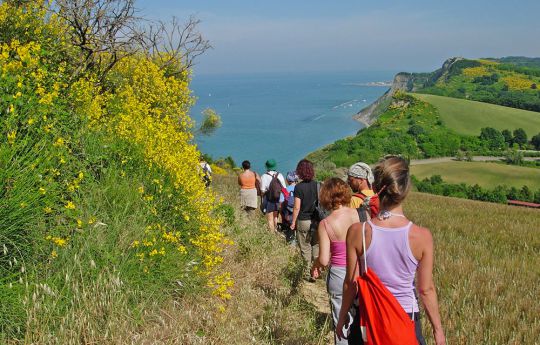
Trekking on San Bartolo
Sea views, wild beaches, and Mediterranean scrub. Route: 4.5 km,…
Discover more


Shopping and Wellness
Tipico.tips-Local gems from Marche The Welcome Pesaro Card gives you…
Discover more


Museums and Monuments
Card Pesaro Capitale DISCOUNTED FOR ALL WELCOME PESARO CARD HOLDERS…
Discover more